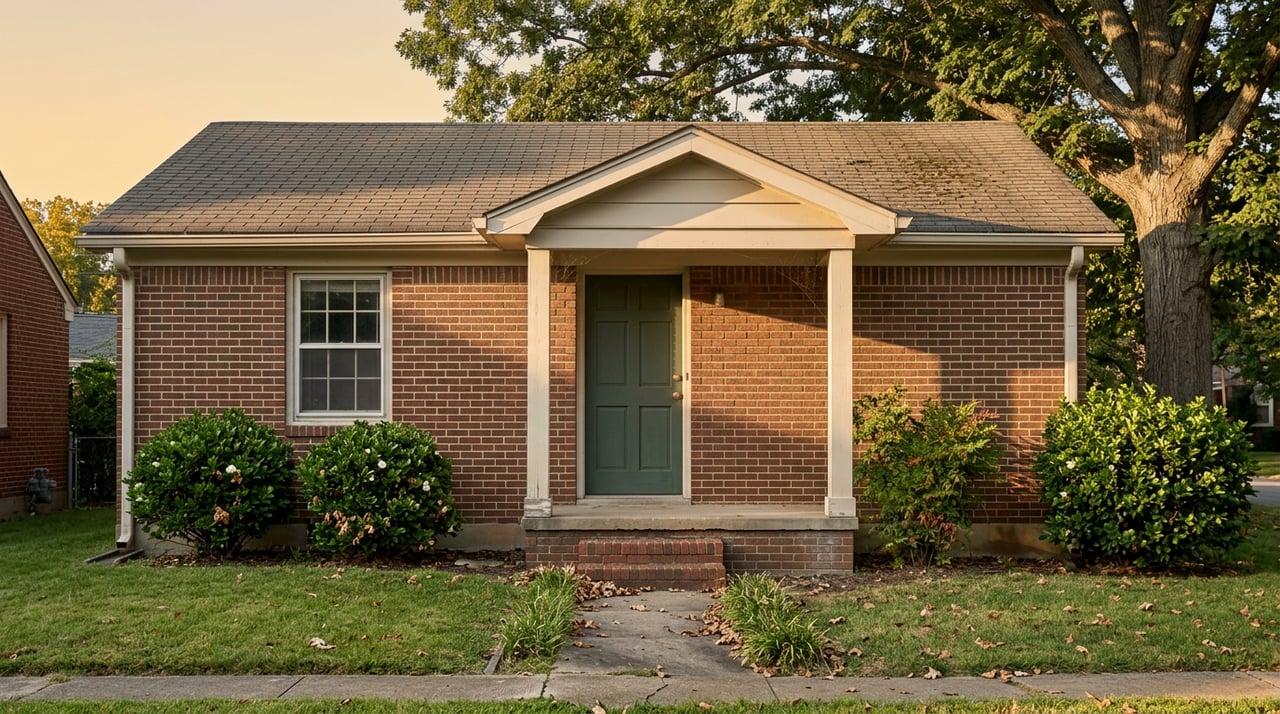
What do you do when your entire town is three-tenths of a square mile, home to fewer than 800 people at the last census count, and doesn't contain a single business inside its own borders? For more than eighty years, the answer in Cammack Village has been simple: you drive to The Heights for dinner, you meet neighbors at Baker Park, and your city government runs out of whatever building happens to be standing at 2710 N. McKinley Street.
That last part is changing. Right now, next to the existing City Hall, a new City Center is coming out of the ground, and the choices behind how it's being built, paid for, and designed say something specific about what this enclave decided it needed most.
The Concrete Went In on June 18
If you live anywhere near N. McKinley Street, you already know the construction is real because you've heard it. The city's own live feed warned residents directly: concrete for the new City Center would be poured starting at 5 a.m. on June 18, 2026, with extra noise and traffic expected around the site that day. That kind of heads-up, sent straight to residents rather than buried in a council packet, is a small tell about how this project has been run from the start.
The center is going up immediately beside the current City Hall, on the same short stretch of McKinley that already holds the Cammack Village Swimming Pool at 2708 N. McKinley. Nabholz is the general contractor, and the new center is expected to be complete in early 2027. At the April 2026 groundbreaking, Mayor Cody Kees said, as quoted by Arkansas Money & Politics, that he was looking forward to the building not just for city services and the Cammack Village Police Department, but as "a place for our neighbors to gather and share life with each other."
That framing matters more here than it would almost anywhere else in central Arkansas.
How You Pay for a City Hall When You Have No Businesses to Tax
Cammack Village has never had a local sales tax base to lean on. The city's operating budget has historically run on its share of the countywide sales tax, because unlike Chenal Valley or West Little Rock, there's no retail corridor generating revenue inside city limits. So how does a town this small fund a multi-million-dollar public building?
The answer is a voter-approved capital improvement bond, not a storm recovery grant and not a line item quietly absorbed into next year's budget. Council minutes from May 2025 lay out the mechanics: the bonds were sold to banks and private parties, Bank OZK was named bond trustee, and Bank OZK also holds the construction fund, releasing money as the project hits its milestones rather than handing it over in one lump sum. That's a standard municipal finance structure, but it's worth naming because it tells you the project was underwritten by people willing to put money behind it, not simply financed on paper.
The number attached to the project, per the city's own request-for-proposal documentation, is just over $3,061,309. For a city of under 800 residents with no commercial tax base of its own, that's not a rounding error. It's a deliberate, voter-backed bet on a single building.
A few other things worth knowing about how this got built:
- Bidding on the project opened in January 2026 through the Arkansas Bid Network, giving contractors a formal, public channel to compete for the work.
- Architects presented final renderings to residents in the fall, following what the city describes as "many citizen workshops and town halls," so the design wasn't handed down. It was shaped by the people who'll use it.
- As early as mid-2025, council discussion floated a groundbreaking as soon as September of that year. It didn't happen until April 2026. Municipal timelines move at municipal speed, even in a town this small.
The Design Choices That Are Doing More Than Housing City Hall
Here's where the project stops being a routine government replacement building and starts being something closer to a town square. Per the Arkansas Money & Politics coverage of the groundbreaking, the new center's key features include a flexible meeting space designed to accommodate a variety of uses, a built-in safe room, and an exterior built around exposed wood trusses specifically meant to create what the design brief calls a "warm, welcoming presence for the community."
None of that reads like standard municipal architecture. A flexible meeting space and a warm exterior finish are choices you'd expect from a building that's trying to double as a community room, not just a place to file paperwork and store patrol cars.
That distinction lands differently in Cammack Village than it would in a neighborhood with its own coffee shop or corner restaurant. Encyclopedia of Arkansas is blunt about this enclave's commercial footprint: no businesses operate within Cammack Village. Everything residents currently think of as a "third place," outside their own homes, exists across the city line. Baker Park, at the corner of Greenwood and Audubon, has carried that weight for years with its picnic tables, gazebo, tennis courts, shaded playground, a looped trail, and a small koi pond. The pool a few doors down from the new construction site fills the same role seasonally.
Baker Park and the pool are both outdoor, weather-dependent spaces. What Cammack Village has never had is an indoor room built for the express purpose of neighbors gathering, rain or shine, winter or summer. That's the gap the new City Center is aimed at closing, and it's why a building that will also house CVPD and city administration is being talked about, by its own mayor, in the language of connection rather than bureaucracy.
What This Means If You're Watching From Your Porch
If your daily routine already runs past N. McKinley Street, expect the visible construction activity to continue through the rest of 2026 and into early 2027, with the completed building becoming the closest thing this enclave has had to a civic gathering hub since it incorporated back in 1943. The concrete pour in June was one milestone in a sequence that started with citizen design workshops, moved through bond financing and competitive bidding, and is now in active vertical construction under Nabholz.
For a town this size, that's not a small story. It's the rare instance of a community small enough that everyone genuinely will use the same building, funding a project they voted for themselves, built to double as the one indoor room they've never had.
Cammack Village has always run on the strength of its own residents rather than the pull of a commercial main street, and this project is a fairly direct expression of that same instinct: no storefronts to lean on, so the town built its gathering space itself.
If you're watching this kind of quiet, resident-driven investment and wondering what it means for property values or timing in this pocket of Little Rock, that's exactly the kind of on-the-ground context Inez Reeder tracks closely for clients considering a move in or around Cammack Village. Reach out anytime you'd like a conversation grounded in what's actually happening here, not just what the listing sheet says.
