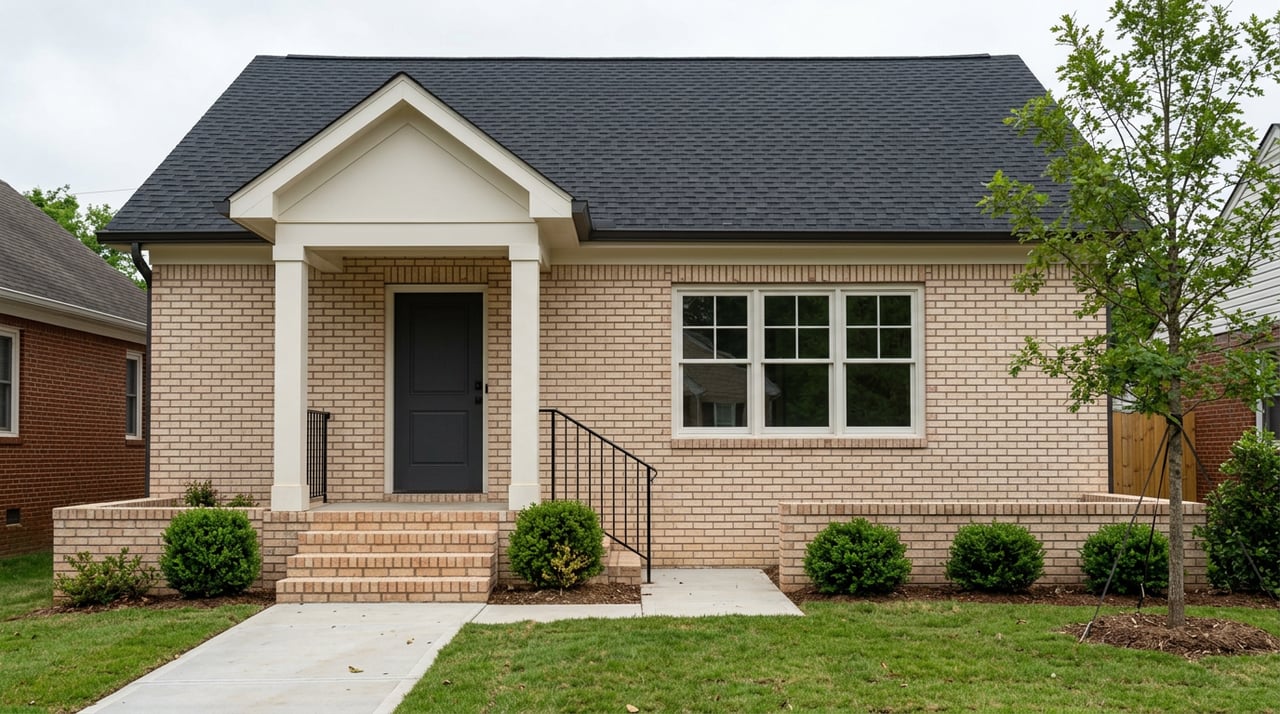
Drive down Kenwood Road on a Saturday morning and you will pass a 1940s army-issue bungalow, roughly the size of a two-car garage, sitting three doors down from a new build with four bathrooms and a soaking tub. Both are for sale. Both carry a Cammack Village address. And if you only looked at the median price for the area, you would have no idea which house you were actually being quoted for.
That gap is not random. It is the visible result of something most buyers never think to check: Cammack Village is not a Little Rock neighborhood. It is its own incorporated city, a few tenths of a square mile, completely surrounded by Little Rock on every side. That single fact, more than square footage or school zoning, explains why prices here behave the way they do and why a few questions before you write an offer matter more than they would almost anywhere else in central Arkansas.
The Vote That Kept It Separate
Cammack Village became a city on April 5, 1943, when landowner Wiley Dan Cammack pushed for incorporation so the new World War II-era housing on his land could get police and fire protection of its own. Three years later, the question came back up. On November 19, 1946, Cammack Village held an election on whether to fold into Little Rock.
The vote came in 141 to 139. A two-ballot margin decided whether the city would exist at all.
A county judge initially ordered the annexation to proceed. The order was challenged in circuit court on procedural grounds, and by the time the dust settled, the opponents of annexation had won. Cammack Village stayed separate, and it has stayed separate ever since, according to the Encyclopedia of Arkansas. Eighty years later, buyers are still living inside the consequences of that recount.
What Running Your Own City Actually Means
Being a separate municipality does not mean Cammack Village runs everything itself. It runs almost nothing itself, by design. The city maintains its own small police force, but water, sewer, electric power, and fire protection all come from Little Rock. According to Wikipedia, there is no local sales tax on the books, and there are no businesses inside the city limits to tax even if there were.
| Service | Who Provides It |
|---|---|
| Police | Cammack Village's own department |
| Fire protection | Contracted through Little Rock |
| Water and sewer | Little Rock |
| Electric power | Little Rock |
| Local sales tax | None enacted |
| Retail or commercial businesses | None within city limits |
That structure shows up in the city's finances. In fiscal year 2022, the most recent year with published audit figures, property tax accounted for roughly 60 percent of Cammack Village's revenue, and the city ran on a total budget of about $300,000, per data drawn from the Arkansas Legislative Audit. There is no retail base to lean on. Everything the city does, it does on property tax and a share of the countywide sales tax, which is also why the parcel you are buying sits inside overlapping taxing jurisdictions, a distinction the Pulaski County Treasurer's office explains in its rundown of how ad valorem taxes are calculated.
The Tornado Rebuilt Half the Stock, and the Numbers Show It
On March 31, 2023, an EF3 tornado tore through this stretch of Little Rock, causing severe damage to homes in and around Cammack Village. That single event is the other half of why prices here spread so wide. New construction went up in 2023 and 2024 alongside the original 1940s and 1950s housing stock, much of it originally built at 870 square feet under wartime U.S. Army specifications for military families before later owners expanded them. The result is a neighborhood where storm-era rebuilds and 80-year-old bungalows sit on the same block, sometimes the same street.
Nearby, the Kingwood neighborhood is still working through its own recovery three years later. Trinity Episcopal Cathedral has led a reforestation effort that has planted more than 300 trees from Cantrell Road through Cammack Village, replacing tree cover the storm stripped away, according to THV11's 2026 follow-up report.
This split housing stock does something specific to the price data, and it is worth sitting with. As of June 2026, active listings in Cammack Village ranged from $306,900 to $1,195,000, with a median asking price of $375,000. Over the twelve months ending in mid-2026, closed sales told an oddly split story: the median sale price came in at $373,000, up two percent from the year before, while a separate measure of overall home values across that same window showed prices down nine percent. Only 25 homes sold in Cammack Village during that entire twelve-month stretch.
That is not a market that changed its mind twice in one year. That is a market small enough that a single $1.1 million new build closing in one quarter and a $300,000 unrenovated bungalow closing in the next can each swing the average by tens of thousands of dollars. In a market this size, the median is a blunt instrument. The address matters more than the number.
What to Check Before You Write an Offer
- Ask when the roof, siding, and windows were last replaced, and whether it was after March 2023. A post-tornado permit tells you the storm history of that specific lot, not just the neighborhood's general reputation.
- Get a wind and hail insurance quote during your inspection period, not after. Two houses a block apart can carry very different premiums depending on the age and construction of the structure itself.
- Confirm your closing agent has correctly prorated every layer of the tax bill. The parcel sits inside Cammack Village, Pulaski County, and the Little Rock School District all at once, each with its own millage.
- Ask who actually responds in an emergency. Police calls go to Cammack Village's own department. Fire calls route through a Little Rock contract, which can mean a different response path than a Little Rock street address would suggest.
Why People Still Choose It
None of this changes why buyers want in. Baker Park remains the neighborhood's gathering point, with its looped trail, tennis courts, and a small koi pond that has outlasted more than one renovation cycle nearby. The city sits two miles from the Arkansas River Trail and within reach of the Big Dam Bridge, and residents have leaned on that community feel through the tornado recovery in the same way they leaned on it through a contested vote in 1946. The city has never had much infrastructure of its own. What it has had, consistently, is people who wanted to keep it separate.
Frequently Asked Questions
Is Cammack Village part of the Little Rock School District? Yes. Despite being its own city, Cammack Village is zoned entirely to the Little Rock School District, and Thomas Jefferson Elementary School sits inside the city's own borders.
Does Cammack Village have its own fire department? No. Fire protection is contracted through Little Rock, the same as water, sewer, and electric service. Only police response is handled locally.
Why do some listings in Cammack Village look dramatically cheaper than others nearby? The neighborhood's housing stock splits between original 1940s and 1950s homes, some as small as 870 square feet before later additions, and newer construction built after the 2023 tornado. That split, not neighborhood quality, drives most of the price spread.
Will I pay a Cammack Village sales tax if I buy or build there? No. The city has never enacted its own local sales tax, and there are no retail businesses within its limits to collect one from in the first place.
If you are weighing a specific street in Cammack Village against something in Hillcrest, The Heights, or further out toward Chenal Valley, the governance layer underneath the listing price is worth walking through before you write an offer, not after. Inez Reeder has spent years working these exact blocks and can help you read a Cammack Village listing the way it actually needs to be read. Request a personalized market consultation to start.
This article is general information, not legal, tax or financial advice. Consult a qualified professional about your situation.
