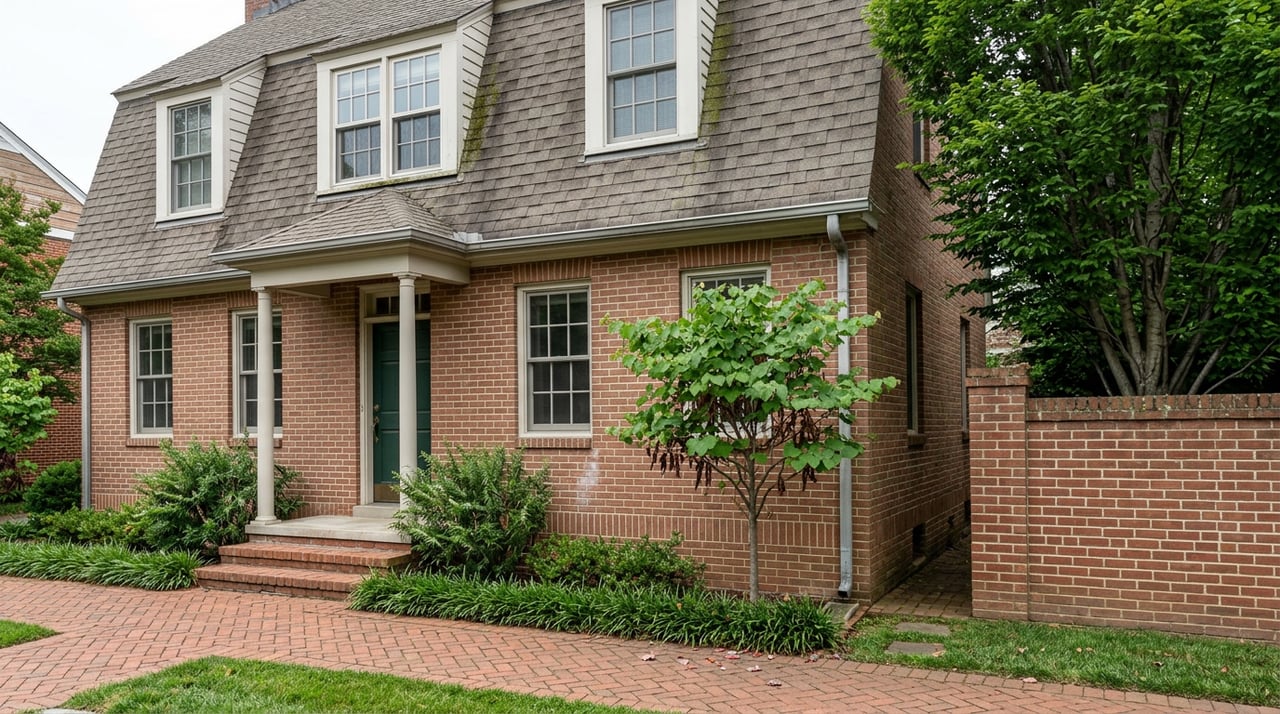
The Arkansas Times reported that, in the spring of 2025, Our Lady of Holy Souls Catholic Church asked the Little Rock Board of Directors for permission to tear down two homes on North Harrison Street and clear sixteen trees to make room for a parking lot. Both houses sat inside the Hillcrest Design Overlay District, the zoning tool residents have leaned on for two decades to keep the neighborhood from losing its shape one lot at a time. The board voted 6 to 3 to approve the request, with Ward 3 Director Kathy Webb, Ward 4 Director Capi Peck, and Ward 6 Director Andrea Lewis voting against it.
That vote is the fact every Hillcrest buyer should know before they consider a home with a wraparound porch two doors down from a vacant lot. The neighborhood's historic status feels like a guarantee. It is not one, and the gap between what people assume and what the ordinance actually says is where offers get complicated.
The boundary was already there
The two houses at 1020 and 1016 N. Harrison St. were not on the edge of some gray area. They sat squarely inside the Hillcrest Design Overlay District, the same district that shows up in every listing description touting the neighborhood's protected character. Tricia Bean, executive director of the Quapaw Quarter Association, told the board the two-story Dutch Colonial Revival at 1020 N. Harrison represented one of Hillcrest's irreplaceable architectural assets. The board approved the demolition to expand the church's parking to 151 spaces.
As the Arkansas Times reported, Kathy Webb's reaction from the dais gets at the disconnect better than any zoning summary could: "I have never heard of a parking lot being an amenity." The overlay district did not stop the vote. It could not, because stopping a demolition was never something the ordinance was built to do.
What the overlay district actually regulates
The City of Little Rock says the overlay does not regulate the style and character of Hillcrest housing; it only suggests that new construction respect the neighborhood's prevailing styles, rather than requiring it.
Demolition itself carries even less friction. Overlay districts like Hillcrest's do not restrict demolition or subject it to a waiting period, which is a big part of why a church parking lot and a torn-down bungalow can clear the same approval process on the same night.
A few things that fall inside the DOD's actual reach, and a few that fall outside it:
- Not governed by the overlay: exterior paint colors, siding and window materials, architectural style, and the timing or approval of a teardown.
- Exempt from the overlay entirely: interior renovation and routine repairs or maintenance, which never trigger a DOD review at all.
That last point matters for anyone planning to gut a kitchen or rebuild a bathroom behind an unchanged facade. Little Rock's own permitting guidance for the district says building permits for interior work only, and routine repairs and maintenance, are not subject to the Hillcrest DOD. The house can look exactly the same from the street while everything behind the walls changes.
This is also why comparing Hillcrest to a place with a true local historic district, like Little Rock's MacArthur Park Historic District, misleads people. In MacArthur Park, the City of Little Rock says exterior changes need a Certificate of Appropriateness reviewed by the Historic District Commission before a permit can even be issued. The protection residents describe when they talk about historic Hillcrest is largely a shared norm among owners, not a legal backstop.
The overlay's origins, twenty years ago
The overlay district exists because of an earlier version of the same fight. As The Free Library's account reports, in 2005 a developer had his eye on a four bedroom house at 1620 Kavanaugh Boulevard and the lot next to it, with plans to raze both for condominiums. A local broker named John Selva paid $125,000 for the house specifically to keep it standing. "That's how much we care about anti-teardown," Selva said at the time, according to the account, and he was not alone. The Heights had already lost at least seven houses to teardowns between 1990 and 2005, and Hillcrest residents did not want to watch it happen on their own streets.
Their answer was the design overlay district that Little Rock still uses today, built around caps tied to lot size. The original proposal would have limited a new house on a typical 7,000 square foot Hillcrest lot to roughly 2,600 square feet on one level or 3,500 on two, with total lot coverage capped near 50 percent and a height ceiling around 35 feet. Two decades later, the same category of dispute, an owner wanting to clear a lot for something the neighborhood did not choose, is still working its way through the same tool, because the tool was never designed to touch demolition in the first place.
The proposed fix, and the debate over it
The Hillcrest Residents Association has known about this gap for years. A committee formed in 2018 spent two years developing amendments meant to close it. The City of Little Rock's Hillcrest DOD page describes proposed minimum combined side yard setbacks of 28 percent of a lot's average width and floor area ratio incentives that reward renovating an existing structure instead of tearing it down. The HRA board endorsed the package unanimously.
What followed was a public fight, not a quiet ordinance update. A petition opposing the changes spread on social media, and the HRA spent years responding to criticism of the proposal before the amendments ever reached a final city vote. As of a Little Rock planning commission case file from March 2026, the overlay was still being cited under its original number, Ordinance 20223, with no city record turned up in this research confirming the HRA's proposed reforms had been formally adopted. The gap that let the Harrison Street demolition through has not been closed by ordinance. It has only been argued about.
What this means when you're writing an offer
If a listing sits next to a smaller or older house, or an empty lot, inside the Hillcrest boundary, the overlay district will not tell you whether a replacement will look anything like what's there now, and it will not slow down a demolition permit if the owner decides to pull one.
If you're buying specifically for Hillcrest's Craftsman bungalows, Tudor cottages, and Dutch Colonial Revivals, understand that what preserves that mix from block to block is mostly the choices of individual owners, alongside a resident association that has spent years seeking broader protections through the ordinance. That is not a reason to avoid the neighborhood. It is a reason to look closely at what sits on either side of a house before you write an offer on it.
The premium buyers are paying anyway
None of this has cooled demand. Over the three months ending in May 2026, Hillcrest's median sale price ran about $326,000, up 7 percent from the same period a year earlier, with homes taking a median of 51 days to sell compared to 43 days the year before. Price per square foot in the neighborhood sits around $194, well above the roughly $139 per square foot typical of Little Rock as a whole in early 2026.
Buyers are paying a real premium, in dollars and in patience, for a walkable, architecturally mixed neighborhood whose look survives on habit rather than statute. That premium is the clearest evidence of what Hillcrest's historic reputation is actually worth on paper. It is worth a lot to buyers. It is worth very little, legally, to a demolition permit.
Frequently asked questions
Is interior work subject to Hillcrest DOD review? Interior work and routine repairs or maintenance are exempt from DOD review entirely.
Does the ordinance restrict demolition or require replacement to match surrounding homes? The ordinance does not restrict demolition itself or require it to match the style of surrounding homes.
Understanding what Hillcrest's overlay does and does not cover is the kind of detail that only shows up when you've watched the neighborhood's cases move through city hall. If you're weighing a purchase near a lot that could change, or a renovation that needs to thread the DOD's actual rules, Inez Reeder can walk through what's realistic for a specific address before you write the offer. Request a personalized market consultation to start that conversation.
This article is general information, not legal, tax or financial advice. Consult a qualified professional about your situation.
